Monday, August 22, 2022

The Bridge: A twenty-four-hour snapshot from Denmark

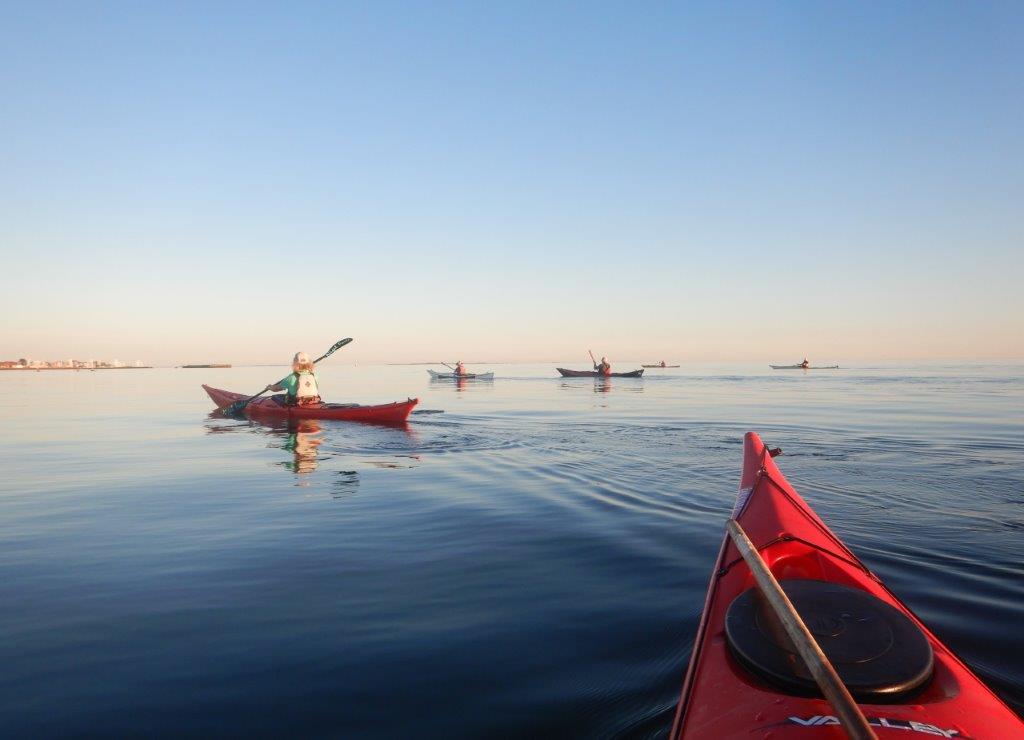
Evening sun on an impossibly calm evening saw a small flotilla of kayaks weave along the shore and out from Sjaelland along Denmark’s Great Belt Bridge as far as its central span. It boasts one of the longest spans of suspension bridge in the world. The water became so quiet we could hear every breath of the harbor porpoises. We were guests of our friends Mark and Jane, in kayaks courtesy of Korsør rowing and kayaking club. As the sun slipped slowly down, the water reflected like a sheet of silver.
The peace of evening
Silvery reflections of evening
Next morning Mark drove us across the 18-kilometer-long Great Belt Bridge to Nyborg on the island of Fyn (Funen), gateway to the west of Denmark. Yellow painted bicycles propped around the town reminded me that the second leg of the 2022 Tour de France cycling race finished here a month earlier. This, one of three stages of this year’s race to be held in Denmark, was an early stage of the Tour won this year by a Dane: Jonas Vingegaard.
Nyborg castle from the Middle Ages
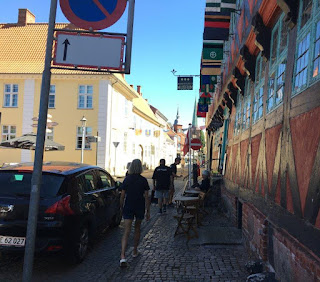
Vendor tents beside cobbled road to Nyborg castle

If the town had been disrupted by the cycling event, something was up today too. Despite the heat, men, and women in costumes from the Middle Ages strolled the streets past ancient timber framed houses, past lines of tents with red-striped canvas standing ready for street vendors. Up the hill stood the newly renovated tall brick Nyborg Castle founded in the 1170’s. There was an air of something about to happen, like thunder in the forecast, so we asked a woman in costume. She seemed eager to tell us. 

The preparations were for the coming weekend of medieval reenactments, she said, with archery contests and jousting with lances on horseback. There would be a grand battle on the knights’ tournament site, along with foods prepared as they had been back then, music, and costumes from the past. It will be an exciting weekend ahead, she promised, but we were a little early. And the day was stiflingly hot. Too hot for fighting medieval style, and much better suited to modern-day ice-cream. We made our way, limp as lettuce, toward the harbor.
Teepee for waterfront bar
Getting ready for a beer bar
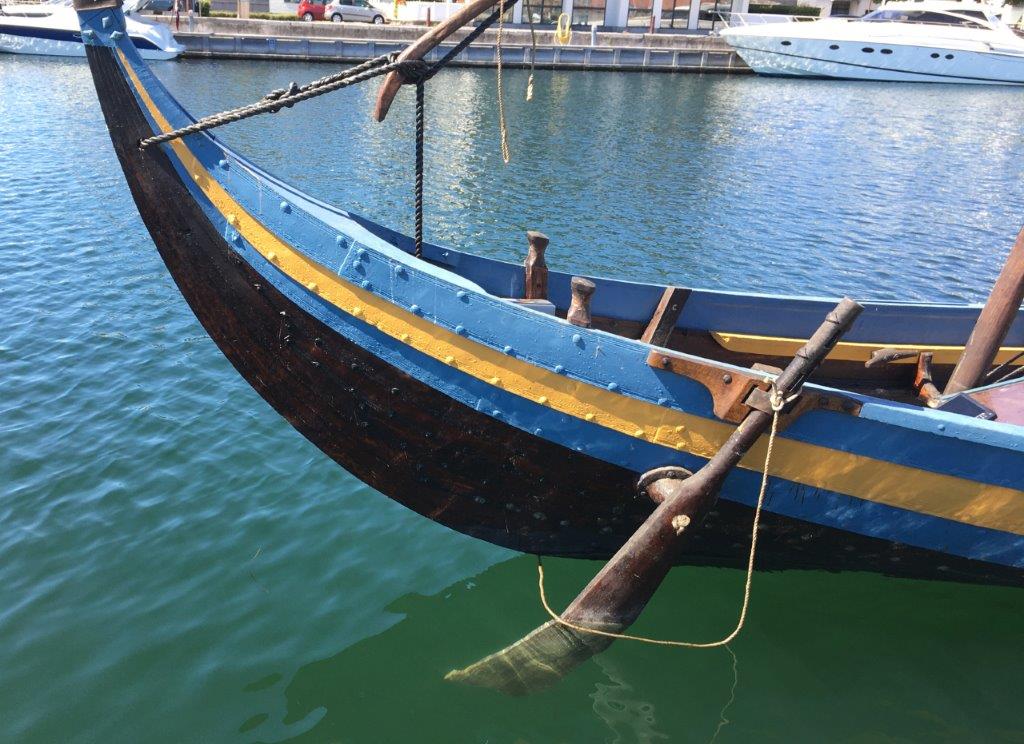
At the waterfront, a big canvas teepee hung, still in the process of setup with one side drooping toward the makings of a beer bar. No, they were not ready to serve beer yet. By the water, a man in Viking costume was casually tying up the replica of a Viking dragon ship beside a pontoon. We joined the small crowd hurrying to look closer look at the new arrival. The ship was the replica of a death ship, the original found buried some 20 kilometers from here at Ladby. This, the only Viking ship burial discovered so far in Denmark, had been buried with the body of a local king with his weapons and other possessions, including horses and dogs, around 925AD.
Replica of Ladby Death Ship
Viking dragon ship visits Nyborg

The ship, at 25.5 meters long, (84 feet) with a maximum beam of 2.9 meters (9.5 feet) and a draft of 0.5 meters, was considered a medium sized, narrow, fast longship. It was a warship that could be powered by a sail of an estimated 60 square meters (think more than 30 x 20 feet) plus by 32 men rowing, sixteen along each side. I saw no sign of such a crew today: just one man and one woman, both dressed in period costume. Did they need crew? But they had only just arrived.

Woman in Medieval costume aboard Viking ship
Woman in Medieval costume guards Viking ship

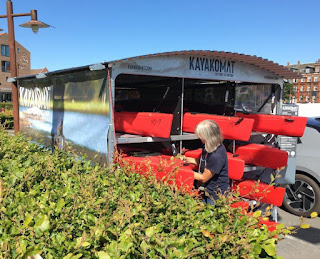
The water looked calm and inviting, but I am not a fan of swimming. I prefer kayaking. As good fortune would have it, a Kayakomat stood near the beer tent. I had seen several of these rental booths in the last three weeks in Denmark and was curious to discover how they worked. Considering my association with Point65, I should at least try one. There was a website address on the banner: easier for me than the Danish instructions on the board. 

Nybog Kayakomat near the water
Kayakomat at Nyborg harbor


On-line it proved ridiculously easy to select the country: Denmark, and the location: Nyborg. There it was on the map: Nyborg. Up popped up suggestions of where to paddle, with local tips and information. Choose a kayak solo, or tandem? Or SUP? Selecting from the craft available, and checking date and time, it took just moments to fill in the required details and pay by credit card. Now to see if it all worked. Numbered berths held the kayaks locked on the rack. A code by text freed the lock and we slid each kayak out. We found the PFD, spray deck, paddle… and bailer and sponge stowed inside.
Kayakomat digital lock
A texted code unlocks the kayak 
A quick glance at the laminated map on the rack helped orient us before we carried to the water to launch. Ha! Freedom, sweet freedom! There is nothing–absolutely nothing–half so much worth doing as simply messing about in boats. (Kenneth Grahame: Wind in the Willows.).
Selecting a solo kayak

Takes two to tandem
Steering on port side of kayak
Steering on port side of kayak?
Steering oar on starboard side of ship
Steering should be on starboard side!
Afterwards, sponging out, stowing the gear, and locking the kayaks in the rack to verify their return was easy, in fact far easier than if we had brought our own kayaks. And after our exercise, surely, a beer at the tent would be perfect.
Waterfront getting ready for weekend festivities
The beer tent not ready to serve yet.
The teepee bar’s not ready yet? NO! NO! Cried Mark! Oh well, back to Jane’s. We’ll have a cold beverage in her garden.

Monday, April 11, 2022

Baffin Island Adventure

 In 1981 I had a plan!
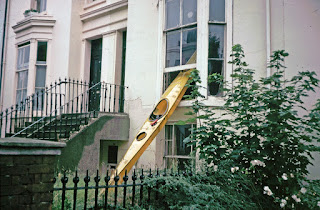
Vyneck kayak leaving appartment in Brighton, England
My Vyneck sea kayak ready to leave.

I would airfreight my kayak to Iqaluit on Baffin Island, Arctic Canada, and follow some weeks later. Launching my kayak into Frobisher Bay, I would head south to Resolution Island. From there I would cross Hudson Strait to northern Labrador and continue south as far as Labrador’s northernmost village Nain. From there I could catch a coastal steamer south to Goose Bay, to a flight home.

The best laid plans of mice and men often go awry. Robert Burns, the Scottish poet wrote something like that in his poem To a Mouse. So, am I a man or a mouse? Either way, I was about to learn how plans can unravel.

The first hitch was a bomb scare at London airport. We passengers were directed to a different plane, but my checked baggage must have remained on the ground. Arriving in New York with only my carry-on bag, I filed the necessary paperwork for the missing bags to be forwarded. Since filing involved customs, as well as two different airlines, I missed my connecting flight. Did I mention that it was August, and I was in New York, wearing my arctic clothing to lighten my luggage?

With no seat available standby on any flights, I slept at the airport, to be awoken by a commotion. The news: 13,000 air traffic controllers had just gone on strike. It became clear there would be no flights leaving. I cashed in my ticket and hitched a ride to Montreal. A day later I flew to Iqaluit.

My sea kayak, air-freighted some weeks earlier, had not yet arrived. As the days trickled by with no sign of either kayak or gear, my plans seemed doomed.
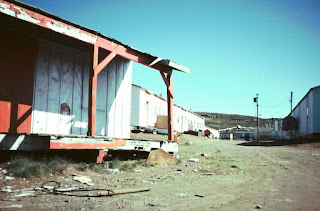
Buildings at Iqaluit, Baffin island
Streets of Iqaluit, Baffin island, 1981.

 But when the best laid plans of mice and men go awry, we should not be afraid to give alternatives a try. A local man, Peter Baril, rescued me and found me somewhere to stay. A kayaker himself, originally from Ontario, he asked if I ever paddled whitewater. He had always wanted to paddle the Grinnell River from its source, Grinnell Lake, some sixty miles away in the barrens. The river enters Frobisher Bay at Iqaluit. With no news of my baggage, I leapt at the chance to paddle with him.
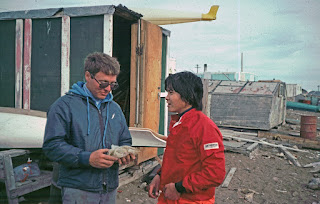
Peter Baril, left, the man with a plan
Peter, left before the Grinnell trip

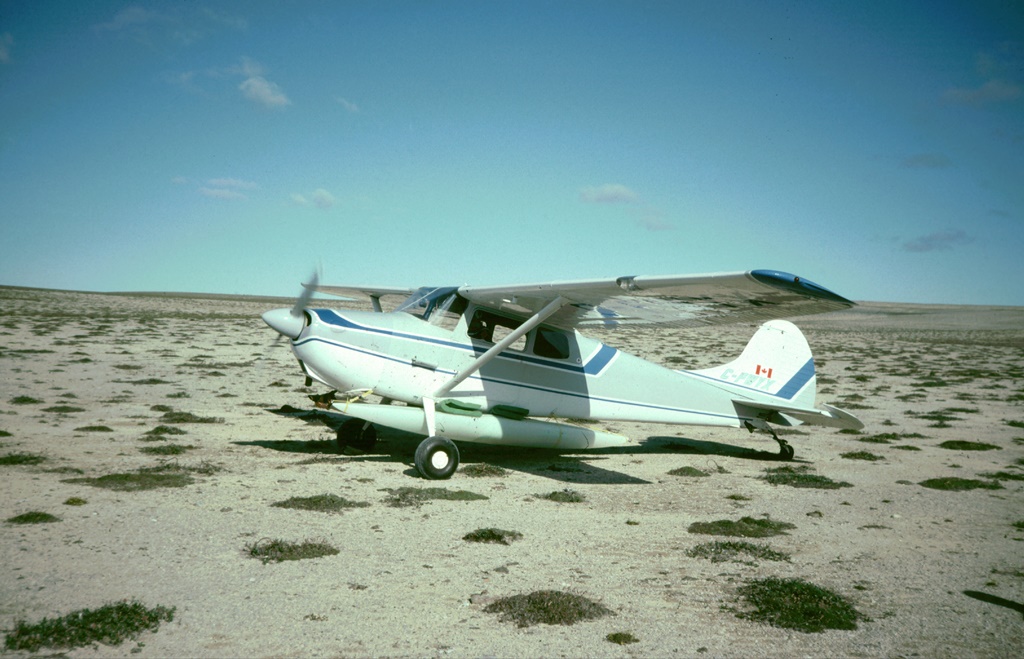
 Peter’s friend, a Danish pilot, agreed to fly Peter’s plastic whitewater kayaks to the lake. He decided to see how the plane handled with kayaks first, flying alone with two kayaks strapped to the fuselage.
 

Lashing the kayaks to the airplane
Iqaluit, we tie the kayaks to the fuselage

Returning from the rough landing place he had marked out near the lake, he next ferried passengers, before fetching the remaining kayaks.
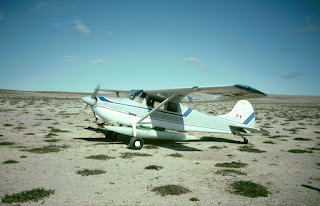
 

Airplane lands with kayaks
Airplane landing with kayaks near Grinnell Lake

 This plan, not of my making, had worked perfectly. Now all we had to do was skirt the edge of the lake until we found the river. By nightfall we had set our first camp where the lake ran into the river.

Two long fun days on the river carried us back to Iqaluit. There, first my kayak, and then my gear turned up. I was free to leave, but I had mixed feelings. I liked the wonderful people of Iqaluit and felt sad to leave. I also felt trepidation. I would be leaving two weeks later than planned. I had already seen the rapid change in daylight hours. I would soon experience how changeable the weather became at the end of summer. Peter’s planned river descent had gone without a hitch. Little did I know that my own plans would continue to unravel.

On the nineteenth of August I loaded my kayak and said goodbye to my friends.
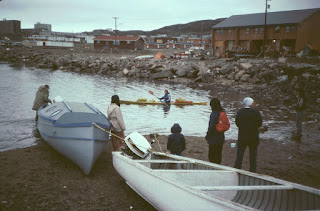
Nigel Foster leaves Iqaluit in kayak 1981
Nigel Foster leaving Iqaluit

 Riding the outgoing tide along Frobisher Bay, I felt lonely. I focused each new target, crossing the bay to the steep mountainous western side, detouring to see icebergs, running the rapids between the islands. But loneliness and uncertainty eases after setting the tent, cooking, and getting a good night’s sleep. Waking to a stunning scene of cliffs and mountains, I soon became at ease with myself. 
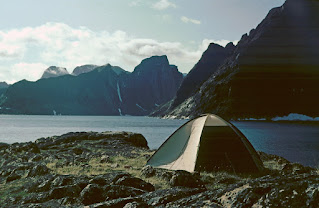
 

Camping, Frobisher Bay
Camping,Frobisher Bay, Baffin Island
 

It would take me a few days to reach the end of Frobisher Bay, where I would leave the Baffin shore for the Lower Savage Islands, and resolution Island. For those few days I could settle into a paddling routine, puzzle how to find good landing spots when the forty-foot tides reached their low point and begin to savor my solitude.
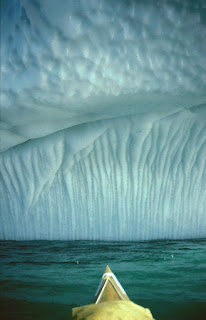
 

Iceberg, Frobisher Bay
Eroding iceberg, Frobisher Bay

In the back of my mind, I held two alternative scenarios. I could circle Resolution Island and return to Iqaluit. That would make a shorter, but very interesting trip. On the other hand, I could continue with my original plan, despite the late start, and head south across the Hudson Strait, some forty miles to northern Labrador. There I would begin the coastal journey south toward Nain.


Map of proposed Stepping Stones trip
Map of Stepping Stones route


Which alternative did I choose? Would my plan finally come together, or would it continue to unravel?

Recently I sat down to a conversation with John Chase. John produces a podcast series, interviewing kayakers from around the world. He asked me about my early paddling experiences and was especially eager to hear about this trip. You can hear our conversation at www.paddlingtheblue.com.